Arroyo Grande Creek Bridge Corridor Improvements
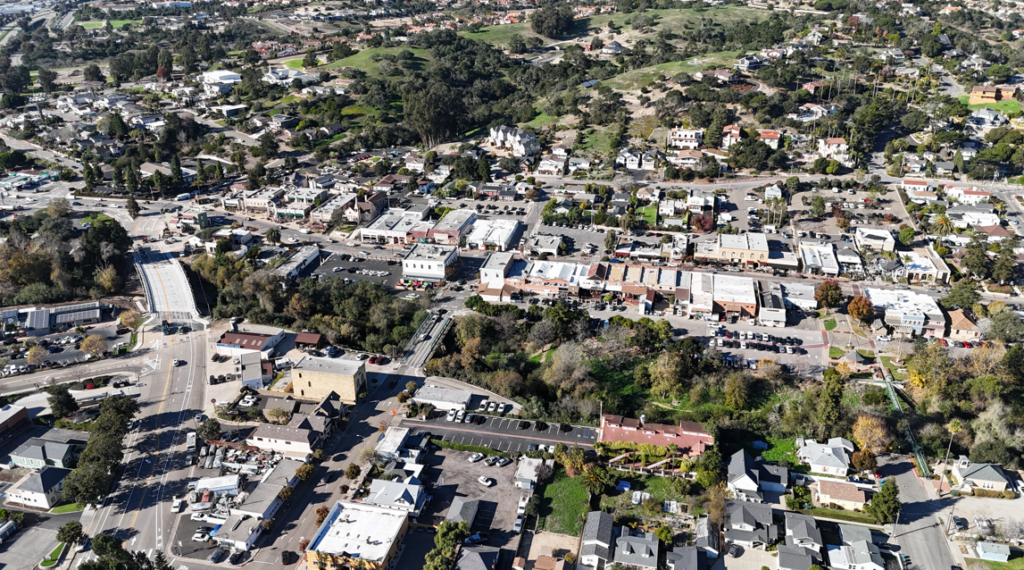
Along a short stretch of Arroyo Grande Creek, three bridges anchor the City of Arroyo Grande’s historic downtown and form a continuous corridor of community movement and local identity. The City advanced improvements at the Traffic Way Bridge, the Bridge Street Bridge, and the Swinging Bridge to address aging infrastructure, public safety, and long-term resilience within a compact and environmentally sensitive channel.
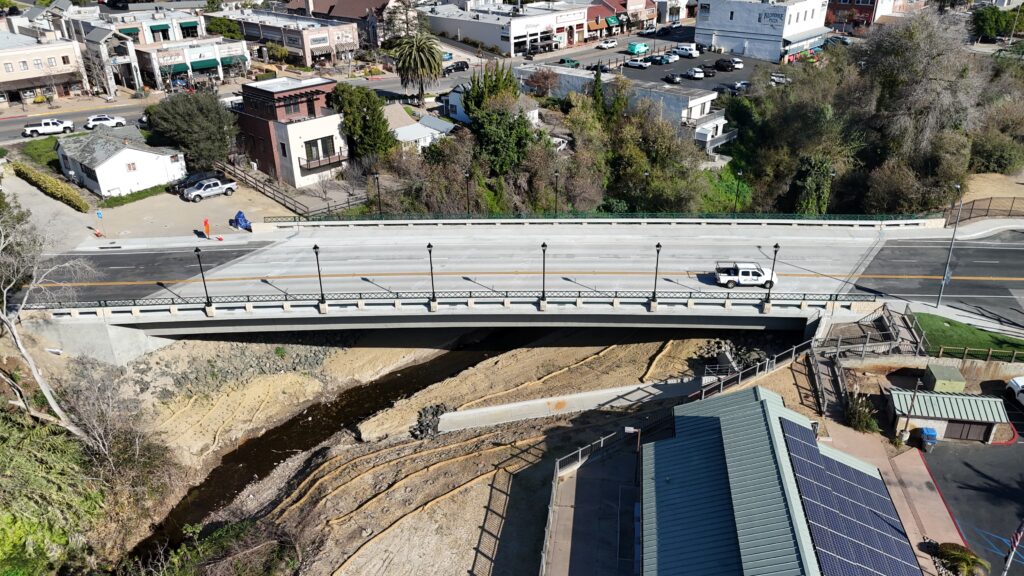
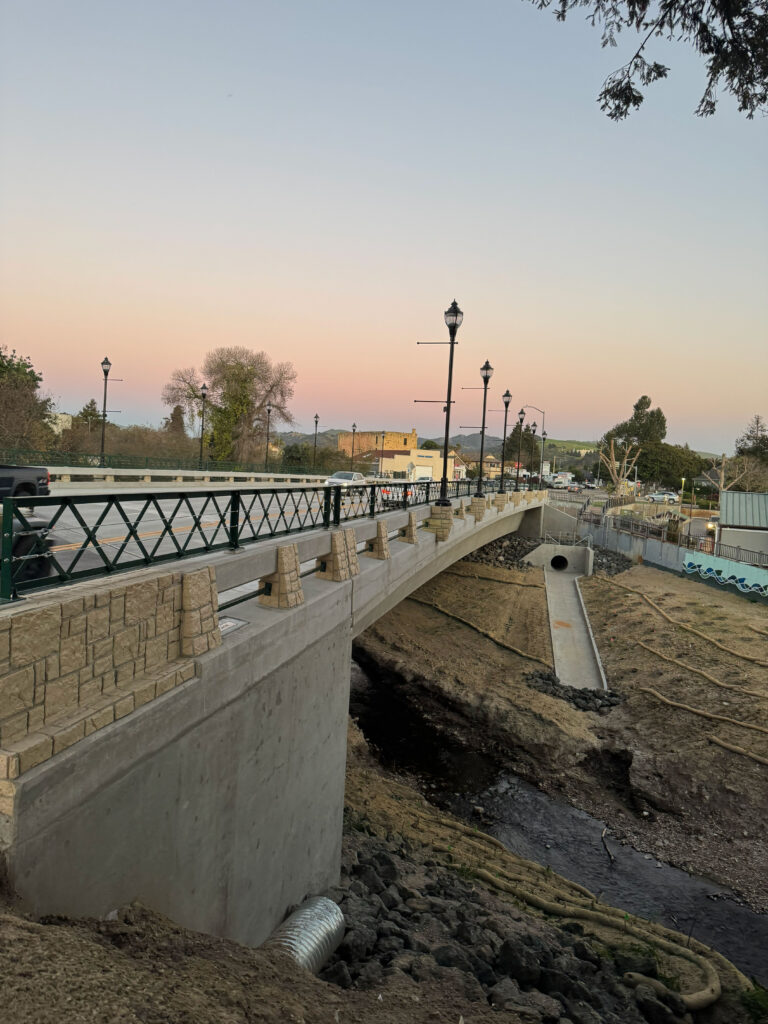
At Traffic Way, an aging five span bridge had experienced scour that elevated the need for full replacement. Limited access, steep banks, and nearby development created significant constraints, so the project team worked with the City to identify an unconventional access route beneath US 101 and through adjacent farm fields. This temporary pathway allowed the contractor to reach the creek without acquiring property, supported a single-season construction window, and enabled a clear-span bridge that removed foundations from the active channel.
Awards
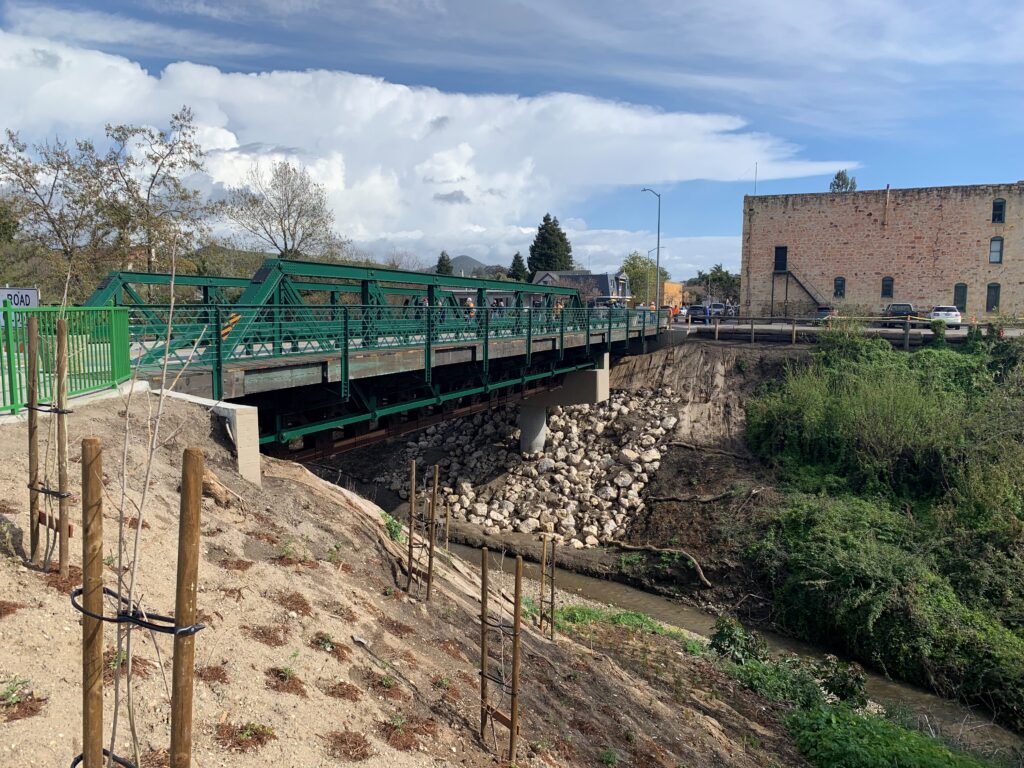
- APWA California Central Coast Chapter: 2022 Project of the Year, Historical Restoration/Preservation (Bridge Street Bridge)
- ASCE San Luis Obispo Branch: 2022 Outstanding Historical Renovation Project (Bridge Street Bridge)
- ASCE San Luis Obispo Branch: 2022 Outstanding Bridge Project (Bridge Street Bridge)
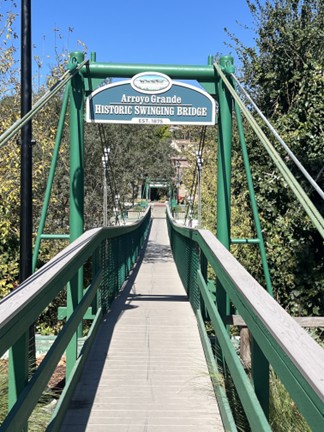
- Helen Putnam Award Nomination (Swinging Bridge)
- ASCE San Luis Obispo Branch: 2026 Outstanding Bridge Project (Traffic Way Bridge)
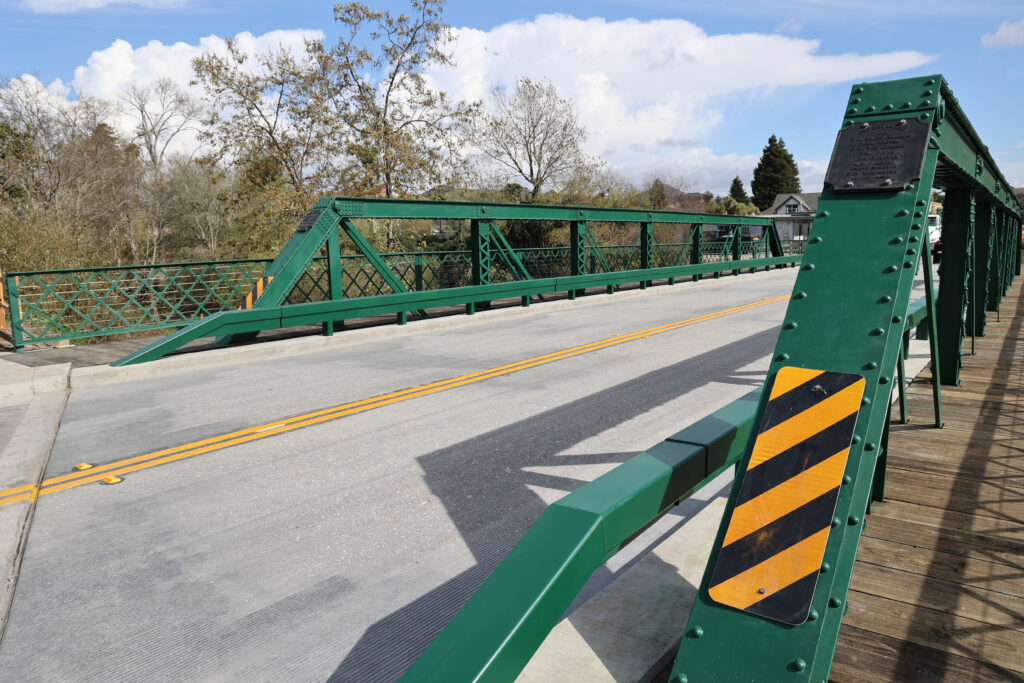
The Bridge Street Bridge required a different approach. Built in 1908, the steel truss is a long-standing landmark, and the City prioritized rehabilitation that retained its character while addressing deterioration, corrosion, and outdated utilities. The work strengthened the structure, introduced new protective coatings, and upgraded critical water and sewer lines within a tight historic district. The structure’s preserved form later informed architectural choices for the new Traffic Way Bridge, creating visual continuity along the corridor.
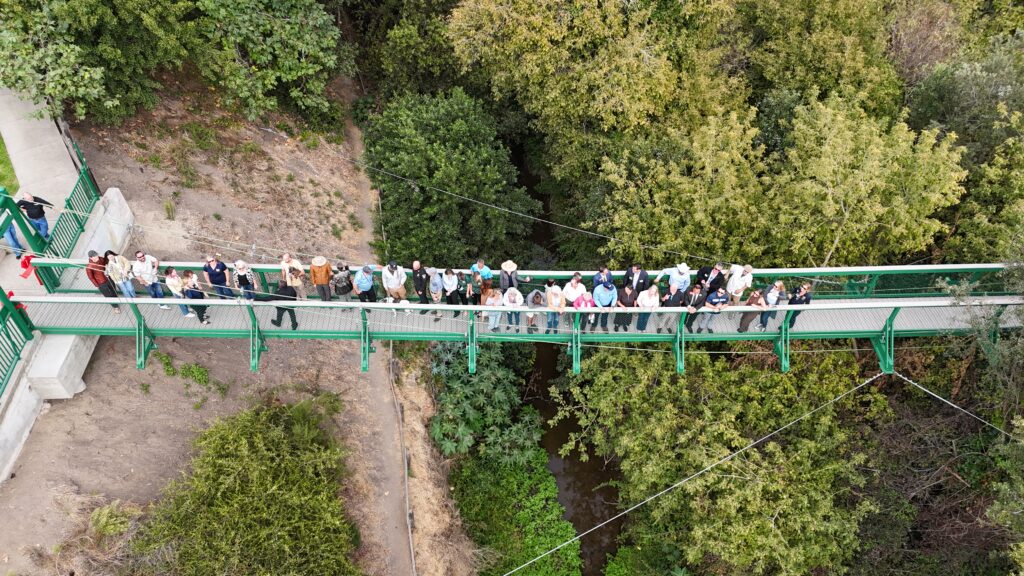
The Swinging Bridge provided the pedestrian connection that completed the system. Years of use had limited its capacity, prompting phased evaluations and planning to support its rehabilitation and safe return to service. Taken together, the work reflects a steady throughline—one team carrying forward creek-specific knowledge, access strategies, and architectural context from project to project.